
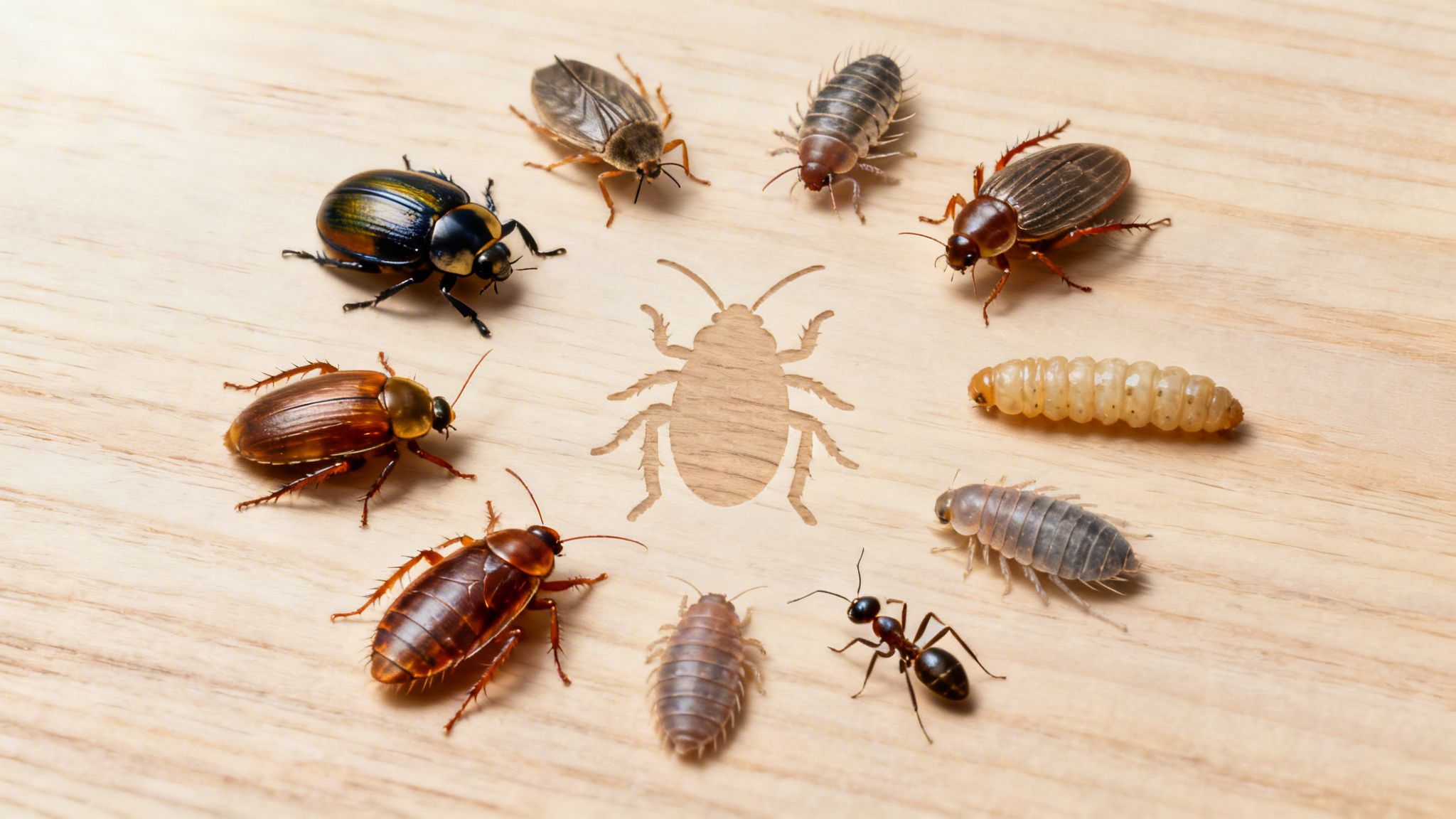

Discovering a small, brown bug in your home can be alarming, immediately raising fears of a bed bug infestation. The question 'what bug looks like a bedbug?' is one of the most common concerns for homeowners across Ontario. Misidentification can lead to unnecessary panic, wasted money on incorrect treatments, or worse, allowing a real bed bug problem to escalate. Bed bugs are a serious issue requiring swift, professional intervention from a qualified bed bug removal service.
However, many other insects share similar characteristics, from size and colour to the locations they inhabit. This guide is designed to help you distinguish between a genuine bed bug and its most common lookalikes. We will provide clear identification points, highlight key differences in behaviour, and offer actionable advice for each imposter.
Understanding the differences is the first critical step toward resolving your pest issue effectively. Whether you're in Toronto, Milton, or Niagara Falls, knowing what you're dealing with ensures you get the right help. For example, a homeowner in Aurora might see small bugs near their wool rug and fear bed bugs, when in reality, the treatment for carpet beetles is entirely different from a bed bug heat treatment. If you ever feel uncertain, the safest and fastest solution is to connect with a verified pest control expert through ServiceQuotes.ca for a definitive identification and a proper treatment plan.
1. Carpet Beetles
Among the most common culprits in cases of mistaken identity, the carpet beetle often causes a panic similar to finding a bed bug. At a quick glance, their small size (typically 3-5 mm) and round, reddish-brown bodies are deceptively similar to an adult bed bug. This initial resemblance is why they are a primary answer to the question, "what bug looks like a bedbug?"
However, a closer look reveals key differences. Unlike the flattened, apple-seed shape of a bed bug, adult carpet beetles have a more rounded, dome-like appearance, similar to a tiny ladybug. Their bodies are covered in fine, almost fuzzy-looking hairs and often feature mottled patterns of black, white, and yellow-orange scales. The most common species found in Canadian homes, the varied carpet beetle (Anthrenus verbasci), showcases this distinct patterning.
How to Tell the Difference: On-Site Checks
- Examine the Shape: Use a magnifying glass. Carpet beetles are distinctly oval and convex (domed), not flat like a bed bug.
- Look for Hairs and Patterns: Bed bugs are smooth. If you see tiny hairs or a splotchy, coloured pattern, you are likely dealing with a carpet beetle.
- Check the Damage: Carpet beetles don't bite people; they feed on natural fibres. A real-life example would be a family in Toronto finding bald patches on an expensive wool rug and holes in stored sweaters, initially fearing a moth or bed bug issue. Finding shed, bristly larval skins in these areas is a definitive sign of carpet beetles.
Key Insight: The true pest is often the carpet beetle larva, not the adult. These tiny, hairy, caterpillar-like grubs are responsible for eating fabrics. Finding them confirms a carpet beetle issue, not a bed bug one.
If you find damage to your belongings or are still uncertain after your inspection, it's wise to get a professional opinion. Correct identification is the first step to effective treatment, and local pest control experts can connect you with local pest control specialists in Toronto and beyond to create a targeted plan for your home.
2. Book Lice (Psocids)
Discovering tiny insects crawling erratically across old books or in a damp basement can trigger immediate concern for bed bugs. Book lice, also known as psocids, are frequently the source of this alarm. These minute insects, measuring only 1-2 mm, can be confused with first-stage bed bug nymphs due to their small size and pale colour. This resemblance makes them a common, though harmless, answer to the question, "what bug looks like a bedbug?"

Unlike bed bugs, which have a distinctly flattened, broad-oval body, book lice have a softer body with a noticeably large head and prominent antennae. Many common species, such as Liposcelis bostrychophila, are translucent to creamy white or pale brown, which adds to the confusion with just-hatched bed bugs. However, their behaviour is a key giveaway; book lice move in a quick, jerky fashion, whereas bed bug nymphs are more deliberate crawlers.
How to Tell the Difference: On-Site Checks
- Observe the Movement: Book lice scurry in short, rapid bursts, almost like they are hopping. Bed bugs tend to crawl with a steadier, more purposeful gait.
- Note the Location: Psocids thrive on mould and fungi, so they are found in areas with high humidity, like damp basements, bathrooms, or around leaky pipes. A common scenario is a homeowner in Niagara Falls discovering them in a cardboard box stored in a damp basement, far from any sleeping areas. Bed bugs congregate where people rest: mattress seams, bed frames, and furniture.
- Check for Bites: Book lice are a nuisance pest, not a biting one. They feed on microscopic mould and starchy materials like bookbinding glue. If you have bites, you are not dealing with book lice.
Key Insight: The presence of book lice is a strong indicator of a moisture problem, not a blood-feeding pest infestation. Their population directly correlates with humidity levels, so controlling moisture is the key to eliminating them.
If you are dealing with a persistent issue or are uncertain about whether you have book lice or bed bug nymphs, a professional evaluation is your best next step. Proper identification is crucial, as the treatment for a moisture-loving psocid is entirely different from that for bed bugs. Contacting expert pest control services in Toronto can help you accurately diagnose the problem and provide a definitive solution.
3. Dust Mites
While they don't visually resemble bed bugs, dust mites are a common source of confusion because they share the same habitat: our beds. These microscopic arachnids, relatives of spiders, measure only 0.2-0.3 mm and are completely invisible to the naked eye. The reason they frequently appear in searches for what bug looks like a bedbug is because they trigger similar physical reactions, such as allergic skin rashes and respiratory issues, that people mistakenly attribute to bites.
The core confusion stems from effect, not appearance. Both pests thrive in mattresses, pillows, and upholstered furniture where they have a ready supply of their food source: shed human skin cells. When someone wakes up with itchy, red welts, their first thought is often bed bugs. However, for many, these symptoms are an allergic reaction to dust mite waste products, not insect bites. Common species include the house dust mite (Dermatophagoides pteronyssinus) and the American dust mite (Dermatophagoides farinae).
How to Tell the Difference: On-Site Checks
- Look for Visible Evidence: This is the most critical step. You can see bed bugs (and their droppings, shed skins, and eggs) with the naked eye. If you can't find any visible insects, droppings, or blood stains after a thorough search, you may not have bed bugs.
- Analyze the "Bites": Bed bug bites often appear in lines or clusters of three (the "breakfast, lunch, and dinner" pattern). A dust mite reaction is more likely a widespread, eczema-like rash or hives, often accompanied by allergy symptoms like sneezing or a stuffy nose.
- Consider the Environment: High humidity is a key factor for dust mites. Using a dehumidifier to keep indoor humidity below 50% can help control their population. If dust mite allergies are a concern, investing in one of the best air purifiers for allergies can also significantly improve indoor air quality.
Key Insight: The problem with dust mites is an allergic one, not an infestation you can see. If you are experiencing bite-like symptoms but can find no physical evidence of a bug, the culprit is more likely an invisible allergen like dust mites rather than bed bugs.
If you find actual insects or are still waking up with bites despite managing allergens, a bed bug problem is a strong possibility. For a definitive identification and effective treatment plan, it's best to consult a professional. The experts at ServiceQuotes.ca can connect you with bed bug removal specialists in Milton and other Ontario cities to resolve the issue quickly.
4. Fleas
Another blood-feeding parasite that often sends homeowners into a panic is the flea. Because both fleas and bed bugs cause itchy bites and can infest bedding, the confusion is understandable. Fleas are tiny (1-3 mm), dark-coloured, and their presence often raises the same alarm bells as bed bugs, making them a common answer to "what bug looks like a bedbug?"

Despite the similar parasitic nature, their appearance and behaviour are quite different. Fleas have bodies that are flattened vertically (from side to side), making it easy for them to move through fur, whereas bed bugs are flattened horizontally (from top to bottom). The most telling difference is their movement; fleas possess powerful hind legs designed for jumping, a feat bed bugs cannot perform. Common species like the cat flea (Ctenocephalides felis) and dog flea (Ctenocephalides canis) are athletic jumpers, a clear sign you are not dealing with a crawling bed bug.
How to Tell the Difference: On-Site Checks
- Observe Movement: If the bug jumps when you try to touch it, it's a flea. Bed bugs only crawl.
- Check Your Pets: Fleas prefer animal hosts. A real-life example is a family in Aurora noticing their dog scratching excessively and then finding tiny jumping bugs on their own ankles. Carefully inspect your cat or dog's fur, especially around the neck and tail, for the insects themselves or for "flea dirt," which looks like tiny black specks of pepper.
- Note Bite Locations: While not foolproof, flea bites are often concentrated on the lower legs and ankles, as they jump from the floor or pet bedding onto a passing human.
Key Insight: The presence of pets is the biggest clue. While fleas can and do bite humans, an infestation almost always originates from a household pet bringing them indoors. Treating the pet is a critical first step in eliminating the problem.
If you find fleas, treating your pets, home, and yard is essential for complete eradication. If you're unsure whether you have fleas or a bed bug issue, professional identification is your best bet. A professional pest control company offers comprehensive services for both, ensuring the correct pest is targeted for effective, lasting results. This includes professional bed bug removal and flea extermination services, ensuring the correct pest is targeted for effective, lasting results.
5. Lice (Human and Body Lice)
While both are blood-feeding parasites, mistaking lice for bed bugs is a common point of confusion, especially with body lice. The small size (2-3 mm) and parasitic nature of lice can trigger a similar sense of alarm. This initial panic, combined with the fact that body lice can be found in the folds of clothing and bedding, makes them a frequent answer to the question, "what bug looks like a bedbug?"
However, there are critical distinctions between these pests. Lice, such as head lice (Pediculus humanus capitis) and body lice (Pediculus humanus humanus), have narrow, elongated bodies, unlike the broad, apple-seed shape of a bed bug. Their legs also feature distinct claws adapted for grasping hairs or fabric fibres, which are visible under magnification. A key behavioural difference is movement; lice are slow-moving and crawl, whereas bed bugs can move surprisingly quickly when disturbed.
How to Tell the Difference: On-Site Checks
- Check the Location: Head lice are found exclusively on the human scalp and hair. If the pests are only on a person's head, they are not bed bugs. Body lice live and lay their eggs in the seams of clothing and bedding, not on the mattress or bed frame itself.
- Look for Eggs (Nits): Lice glue their eggs, called nits, to hair shafts (head lice) or fabric fibres (body lice). Bed bug eggs are found in cracks and crevices of furniture, never on a human body.
- Assess the Shape and Legs: Use a fine-toothed comb and a magnifying glass. If the bug is long and narrow with visible claws for grasping, you are dealing with lice. Bed bugs are flatter and wider.
Key Insight: The most significant difference is habitat. Bed bugs hide in furniture and come to you to feed. Lice live directly on their host (head lice) or in the host's immediate clothing (body lice). The problem is confined to the person and their garments, not the entire room.
If you find pests in clothing seams but are also experiencing bites and suspect a wider infestation in your bedroom, it's crucial to get a professional diagnosis. A pest control service can quickly distinguish between a widespread bed bug problem and a more contained issue, preventing unnecessary treatments. For instance, local bed bug removal specialists in Niagara Falls can perform an inspection to confirm the identity of the pest and implement the correct treatment plan for your Ontario home.
6. Booklice Variants and Psyllids
The tiny size of booklice and psyllids makes them prime candidates for being mistaken for bed bug nymphs. Psyllids, also known as "jumping plant lice," are particularly confusing as these small insects (1-3 mm) can enter homes during seasonal migrations. Their sudden appearance indoors often sparks concern, leading homeowners to wonder if they’ve found the early stages of a bed bug infestation, making them a frequent answer to the question, "what bug looks like a bedbug?"
However, crucial behavioural and physical differences set them apart. Psyllids, like the Asian citrus psyllid (Diaphorina citri) or the pear psyllid (Cacopsylla pyricola), have elongated bodies and prominent hind legs built for jumping when disturbed. Booklice are similarly small but are typically found in damp, humid areas where they feed on mould and fungi. Bed bugs, in contrast, are solely focused on seeking a blood meal and hide near their host.
How to Tell the Difference: On-Site Checks
- Check the Location: Psyllids are attracted to light and are often found on windowsills, screens, or near light fixtures. Booklice prefer humid areas like basements or poorly ventilated bathrooms. Bed bugs hide in cracks and crevices near beds and furniture.
- Observe Their Reaction: Gently poke the insect. A psyllid will likely jump, a behaviour bed bugs do not exhibit.
- Analyse the Shape: Use a magnifying glass. Psyllids and booklice have a more elongated or "louse-like" shape compared to the broad, flat, seed-like body of a bed bug nymph. Psyllids also have visible wings, which bed bugs lack at all life stages.
Key Insight: The attraction to light is a definitive clue. If the mystery bugs are congregating on or around your windows, you are almost certainly dealing with an occasional invader like a psyllid, not a light-averse bed bug.
If the insects are widespread indoors or you cannot get a clear identification, professional help is the best course of action. An experienced technician can differentiate between a seasonal nuisance and a serious infestation like bed bugs. You can find local pest control specialists in Niagara Falls and other Ontario cities to accurately identify the pest and provide the right solution.
7. Mosquito Larvae and Midges
Finding small, wriggling creatures in a damp area of your home, like a basement or bathroom, can be alarming. Mosquito larvae and non-biting midge larvae, which are aquatic or semi-aquatic insects, can sometimes cause this confusion. Their small size (3-5 mm) and unexpected presence indoors might initially make a homeowner wonder if they've found some stage of a bed bug infestation, especially in a stressful situation. This makes them a surprising but relevant answer to "what bug looks like a bedbug?"
However, these insects are fundamentally different from bed bugs in nearly every way. Found in stagnant water or perpetually damp environments, these worm-like larvae require moisture to survive. This is a stark contrast to bed bugs, which thrive in dry locations like mattresses and furniture. Common examples include mosquito larvae (Culicidae family) in standing water, non-biting midge larvae (Chironomidae family) in chronically wet soil, and drain fly larvae (Psychodidae family) inside slimy drains.
How to Tell the Difference: On-Site Checks
- Check the Location: Are the bugs exclusively in or near a water source? Bed bugs are almost never found in standing water. A real-life example is finding tiny "worms" in a bucket collecting water from a leaky pipe in a Milton basement. This is a clear indicator of a moisture-related pest, not bed bugs.
- Examine the Shape and Movement: Mosquito and midge larvae are distinctly worm-like or grub-like. They wriggle and squirm, a movement pattern completely different from the crawling of an adult bed bug.
- Look for Water Sources: The presence of these larvae points directly to a moisture problem. Look for leaky pipes, poor drainage, condensation, or areas of water damage. Bed bugs are not an indicator of water issues.
Key Insight: The discovery of these larvae is not a pest control issue in the traditional sense; it's a moisture control issue. These insects do not bite people or damage your home's structure. Eliminating their damp habitat by fixing leaks and improving ventilation will resolve the problem naturally.
If you find significant water damage or can't locate the source of the moisture, it’s critical to act quickly. While this might not require pest control, a professional service can confirm the pest is not something more serious, like termites, which also thrive in damp conditions. Contacting local pest control specialists in Niagara Falls can help identify the pest and determine if the moisture has created other problems, while also providing peace of mind.
8. Spider Mites
Though they are arachnids and not insects, spider mites can cause confusion when found in large numbers inside a home. These minuscule pests (often less than 1 mm) are related to spiders and ticks and feed exclusively on plant sap. An infestation on a houseplant near a bed or sofa can lead to them being discovered in living spaces, raising the alarm and making them a surprising answer to the question, "what bug looks like a bedbug?"
Their tiny, often reddish, dot-like appearance can be vaguely reminiscent of bed bug nymphs at a very quick, untrained glance. The most common species, the two-spotted spider mite (Tetranychus urticae), can create dense clusters that might be mistaken for a pest gathering. However, their behaviour and habitat are entirely different from the blood-feeding bed bug.

How to Tell the Difference: On-Site Checks
- Check the Location: Spider mites will be concentrated on and around houseplants. Look for them on the undersides of leaves. Bed bugs are found in mattress seams, bed frames, and furniture crevices, not on plants.
- Look for Webbing: A key sign of spider mites is the presence of fine, silk-like webbing on the plant’s leaves and stems. Bed bugs do not produce webs.
- Observe the Damage: Spider mites cause stippling (tiny yellow or white dots) on leaves as they feed, eventually causing the leaf to turn yellow and drop. Bed bugs leave behind blood stains on sheets and bites on people.
Key Insight: The environment is the biggest clue. If the tiny "bugs" are only found on a sick-looking houseplant and you see delicate webs, you are dealing with spider mites. Bed bugs are focused on areas where people rest.
While spider mites are a horticultural problem, not a structural one, misidentification can cause unnecessary stress. If you've found pests in your home and aren't sure of their origin, getting an expert to identify them is crucial. Professional pest control services in Niagara Falls can accurately diagnose your problem and provide peace of mind, confirming you don't have a more serious issue like bed bugs.
Comparison of 8 Bedbug Lookalikes
| Pest | Identification Complexity | Resource Requirements | Expected Outcome | Ideal Use Cases | Key Advantages |
|---|---|---|---|---|---|
| Carpet Beetles | Medium — visible (3–5mm) but can resemble bed bugs; magnification helpful | Frequent vacuuming, laundering, sealed storage, targeted larval treatments; possible professional service | Good control with thorough cleaning; larvae may require repeat efforts | Homes with textile damage, closets, upholstery | Do not bite; damage patterns help identification; preventable by storage |
| Book Lice (Psocids) | High — very small (1–2mm), fast-moving and easily missed | Dehumidification, ventilation, sanitation, sealed storage; limited chemical use; professional ID if uncertain | Excellent when moisture reduced; populations decline rapidly | Damp basements, book/paper storage, high-humidity areas | Non-biting; indicates humidity problems; controllable by environment fixes |
| Dust Mites | Very high — microscopic (0.2–0.3mm); require microscope for confirmation | Allergen management: encasements, hot washing, dehumidifiers, HEPA vacuums; ongoing maintenance | Reduced allergen load and symptoms; eradication impractical | Homes with allergy/asthma sufferers; bedding hygiene focus | Do not bite; health impact mainly allergic and manageable with routine measures |
| Fleas | Medium — 1–3mm; jumping behavior and pet association distinguishable | Treat pets (veterinary products), wash bedding, vacuuming, environmental insecticides | Good control when pets and environment treated together; repeated treatments often needed | Homes with pets, flea bites, or flea dirt on bedding | Source often obvious (pets); jumping motion is distinctive |
| Lice (Human & Body) | Low–Medium — 2–3mm, found on hair or clothing; nits visible | Medicated shampoos/treatments, combing, hot washing of clothing/bedding, hygiene measures | High success with correct treatment and repeat checks | Scalp infestations, outbreaks in close-contact settings | Location on body/clothes makes ID clear; effective topical treatments available |
| Booklice Variants & Psyllids | Medium — small (1–3mm); may be seasonal and mistaken for nymphs | Seal entry points, reduce indoor plants/moisture, light exclusion; occasional pest control | Usually temporary; removal/exclusion resolves infestations | Seasonal indoor invaders near windows or houseplants | Non-biting; attracted to light so exclusion is effective |
| Mosquito Larvae & Midges | Low — larvae confined to water sources; habitat is distinct | Eliminate standing water, fix leaks, improve drainage; possible water remediation | Rapid reduction once sources removed; may require structural repairs | Areas with standing water, drains, basements with moisture | Habitat-dependent control is straightforward; signals urgent moisture issues |
| Spider Mites | High — tiny (0.5–1mm), plant-associated; look for webbing and leaf damage | Isolate plants, increase humidity, water/biological treatments, miticides or neem, ongoing monitoring | Good plant-level control with targeted treatments; recurrence possible | Infested houseplants, greenhouse or plant collections | Restricted to plants (not biting); webbing and plant damage aid ID |
When in Doubt, Get Professional Help: Your Next Steps for a Pest-Free Home
Navigating the world of small, brown insects can be a confusing and stressful experience. As we've detailed, many common household pests, from carpet beetles and booklice to fleas and spider mites, share characteristics with the notorious bed bug. The core challenge lies in the details: subtle differences in body shape, antennae length, and habitat that are often difficult for an untrained eye to spot. The anxiety of a potential bed bug problem can lead to hasty decisions, but a misidentification means wasted time, money, and ineffective treatments.
The most critical takeaway from this guide is that certainty is paramount. While understanding what bug looks like a bedbug gives you a strong starting point, it doesn't replace a professional diagnosis. For instance, a business owner might require commercial pest control for what they think are bed bugs, but an expert may identify a different pest requiring a completely different strategy. Similarly, using a bed bug spray on carpet beetles will not solve the underlying issue of larvae feeding on natural fibres in your home.
Actionable Steps for Peace of Mind
Before panic sets in, follow a clear, logical process. Capturing a clear photo or a physical sample of the bug is your first and most important step. Avoid crushing it, as this can make identification impossible. Once you have your evidence, your next move shouldn't be a trip to the hardware store for a generic pesticide. It should be to consult an expert. This is where a professional pest control service becomes indispensable. They have the training and equipment to make a definitive identification, assess the scope of the problem, and recommend a targeted solution that actually works.
For homeowners in Ontario, this process is straightforward. Whether you're dealing with a mysterious bug in a Toronto apartment, a persistent pest problem in a Niagara Falls home, or require another service like rodent removal alongside your bug issue, professional help is just a few clicks away. A certified technician can not only confirm if you have bed bugs but also provide a strategic plan for their complete removal. They can also offer valuable preventative advice, such as recommending the use of high-quality mattress protectors for bed bugs to safeguard your sleeping areas from future infestations. Taking decisive, informed action is the key to quickly reclaiming your home and your peace of mind.
Don't let uncertainty about a potential pest infestation cause you another sleepless night. Use ServiceQuotes.ca to get fast, free quotes from vetted and insured pest control professionals in your local Ontario city, from Aurora to Milton. Simply describe your issue and connect with experts ready to provide a definitive identification and an effective solution.