
That unmistakable scratch, scratch, scurry from the ceiling is enough to make any homeowner’s blood run cold. If you’ve heard it, you know your attic is no longer just storing holiday decorations—an unwanted pest has moved in. This is more than just a nuisance; it's a serious problem that demands a professional pest control service.
First Steps for Animal Noises in Your Attic

The second you hear something moving around up there, your mind starts racing. Is it a family of raccoons? A squirrel building a nest? Or just a few mice? It’s tempting to either cross your fingers and hope it goes away or grab a ladder and investigate yourself, but both of those reactions can make things much, much worse.
We've seen it happen time and again. A client in Milton, Ontario, heard some faint scratching for a few weeks and figured it was nothing. By the time they contacted our pest control Milton partners, a family of raccoons had completely shredded their insulation, chewed through live electrical wires, and established a latrine that soaked right through the ceiling drywall. The damage ran into the thousands. This is a perfect example of how a small problem can quickly become a major threat to your home and family.
Why You Need to Act Fast
Putting off a call to the pros gives that one animal time to invite friends or, worse, start a family. This is especially true in the spring during birthing season, when a single intruder can lead to a full-blown infestation in a matter of weeks.
Here’s exactly what’s at stake:
- Structural Damage: Raccoons and squirrels are incredibly destructive. They'll tear up insulation to build nests, rip apart ductwork, and even gnaw on the wooden beams that support your roof. Your home’s energy efficiency and structural integrity are on the line.
- Fire Hazard: This is the big one. Rodents and squirrels have a biological need to chew constantly, and they absolutely love the soft plastic coating on electrical wiring. Frayed wires are a severe fire risk that can smoulder undetected in your attic until it’s far too late.
- Health Risks: Wildlife waste is a serious biohazard. Raccoon droppings can carry roundworm eggs, which are dangerous if inhaled, while bat guano can cultivate a fungus that causes a severe respiratory illness called histoplasmosis.
Before you can tackle removal, it helps to know what you’re up against. Different animals leave behind different clues.
Quick Identification Guide for Common Attic Pests in Ontario
Use this table to make an educated guess about your uninvited guest based on the sounds you're hearing and the evidence you might find.
| Animal | Common Noises | Typical Evidence | Primary Risk |
|---|---|---|---|
| Raccoons | Heavy thumping, loud scurrying, growling, or "chattering" sounds, especially at night. | Large droppings (latrines), torn ducts/insulation, visible entry holes on the roof. | Major structural damage and biohazards. |
| Squirrels | Fast, light scurrying or scratching sounds, often in the morning or late afternoon. Rolling or "bowling" sounds of nuts. | Chewed wood or wires, shredded insulation for nests, small droppings scattered about. | High fire risk from chewing wires. |
| Mice/Rats | Faint, rapid scratching or squeaking, primarily at night. | Small, pellet-like droppings, gnaw marks on wood or stored items, greasy rub marks along walls. | Disease transmission and wire damage. |
| Bats | Soft scratching, chirping, or squeaking sounds, usually at dusk and dawn near the eaves. | Piles of guano (droppings) that look like black rice, strong ammonia smell. | Rabies risk (rare) and lung disease from guano. |
Knowing the likely culprit helps a professional plan the most effective and humane removal strategy right from the start.
The Dangers of DIY Animal Removal in Ontario
Trying to solve this problem yourself might seem like a way to save money, but it’s a minefield of legal and ethical problems. In Ontario, wildlife control is strictly regulated by the Ministry of Natural Resources and Forestry. You can't just trap and relocate an animal wherever you want.
Trapping an animal and driving it miles away seems like a kind solution, but it’s often a death sentence. The animal is disoriented, can’t find food or shelter, and may be separated from its young. If you seal the entry point while babies are still inside, they will die in your attic, creating an even more horrific problem.
If the worst does happen and an animal perishes in your walls or attic, the situation becomes an urgent biohazard case. Knowing the proper steps for dead animal odor removal is critical, as the smell and bacteria are incredibly difficult to eliminate without professional-grade equipment and cleaning agents.
This is why calling a certified pest control professional is always the smartest, safest, and most effective route. A true expert won't just remove the animals; they'll do it humanely and, most importantly, find and seal every last entry point to guarantee they don't come back.
Whether you're in a dense Toronto neighbourhood or a more rural area like Aurora or Niagara Falls, a local pest control specialist can provide a permanent solution. Getting fast, vetted quotes is the key to stopping the damage before it escalates. Platforms like ServiceQuotes.ca let you connect with local, pre-screened wildlife and pest control experts across Ontario. You can compare up to 3 free quotes, read reviews, and get someone on the phone right away for an emergency job, preventing a small issue from turning into a costly nightmare.
Identifying Your Unwanted Attic Guest

So, you're hearing strange noises from above. Before you can even think about getting someone out to help, you need to play detective. Figuring out what kind of animal has made your attic its new home is the most critical first step. After all, the plan for evicting a squirrel is completely different from handling a mother raccoon and her kits.
Every animal leaves behind its own unique set of clues. Learning to read these signs—from the sounds they make to the mess they leave behind—will help a local wildlife pro know exactly what they’re walking into. This isn’t just about curiosity; it’s about getting the job done right the first time, safely and humanely.
The Destructive Power of Raccoons
When it comes to attic invaders, raccoons are the heavyweights. They aren't subtle. These animals are strong, surprisingly smart, and can cause an incredible amount of damage in a short time.
A homeowner in Toronto found this out the hard way. They heard some loud thumping at night but decided to wait it out for a week. By the time they called for help from a local pest control Toronto service, a mother raccoon had already torn a hole the size of a grapefruit in their soffit, shredded HVAC ducting, and set up a latrine that had soaked right through the attic insulation.
Keep an ear out for these tell-tale raccoon signs:
- Sounds: Heavy walking, thumping, and surprisingly loud "chattering" or growling noises, almost always at night.
- Droppings: Raccoons are tidy in their own way, often choosing one spot as a "latrine." Their droppings are large and tubular, much like a small dog's, but you'll often see undigested berries or seeds in them.
- Damage: Look for insulation that's been torn up and matted down for nesting, ripped-apart ductwork, and obvious entry holes on the roof, especially around vents and soffits.
Because of the serious risk of raccoon roundworm found in their feces, this is a cleanup job best left to the pros. If you think you’re dealing with raccoons, our network includes rodent removal teams across Ontario who are fully equipped to handle these bigger critters safely.
The Fast and Frantic Squirrels
Squirrels might be smaller than raccoons, but they bring their own specific danger: their relentless chewing. If you have squirrels, the sound is often a fast, frantic scurrying, especially during daylight hours.
Think about a situation a Niagara Falls homeowner recently dealt with: flickering lights and a faint burning smell. An inspection from a pest control Niagara Falls expert found a squirrel family had been gnawing the plastic coating off electrical wiring, creating a serious fire hazard. It's a common story, as a squirrel’s teeth grow constantly, meaning they have to chew on things to wear them down.
A squirrel's need to gnaw isn't just a bad habit—it's a biological imperative. Electrical wiring offers the perfect texture, making them a direct fire risk in any home they infest.
Here’s what to look for with squirrels:
- Sounds: Quick, light scurrying and scratching noises, most often around dawn and dusk. You might even hear the sound of nuts rolling around above you.
- Droppings: Their droppings are small, oval-shaped, and look a bit like dark grains of rice. Unlike raccoons, they leave them scattered all over the attic.
- Damage: Keep an eye out for shredded insulation, clear gnaw marks on wooden beams, and little stashes of nuts or acorns tucked into corners.
Bats and Birds The Silent Partners
Bats and birds can be much sneakier. Their signs are more subtle, which means they often go unnoticed for longer, but the health risks can be just as serious. Bats can squeeze through a gap smaller than a dime, while birds love to build nests inside unsecured exhaust vents.
A family in Aurora kept noticing a persistent, musty odour, almost like ammonia, but couldn't place it. A pest control Aurora expert finally discovered a small bat colony roosting near the roof's peak. The smell was coming from their accumulated guano (droppings), which can carry the spores that cause histoplasmosis, a nasty lung infection.
How to spot these invaders:
- Bats: You might hear very faint scratching or high-pitched chirping right around dusk and dawn. The biggest giveaway is piles of guano—dark, crumbly pellets that build up directly under where they roost.
- Birds: Listen for chirping or fluttering sounds, especially coming from exterior vents. You'll likely find nesting materials like grass, twigs, and feathers clogging up your bathroom or kitchen vents.
Getting a positive ID on your attic guest is the first move toward taking your home back. Whether you're in Milton or downtown Toronto, giving a pro this info helps them show up with the right equipment and a solid plan. And if you need help with anything else, our network can connect you with local experts in everything from bed bug removal to the most complex wildlife problems.
Humane and Legal Wildlife Removal: The Ontario Approach
When you hear scratching in the attic, your first thought is probably, "How do I get it out?" But in Ontario, the how is just as important as the what. Wildlife control is a regulated field here, and for very good reasons. The old-school approach of trapping an animal and driving it to a park across town? Not only is that often illegal, but it's also incredibly cruel.
If you're looking for an "animal removal from attic near me," you need to find a pest control company that plays by the rules—specifically, the ones set out by Ontario's Ministry of Natural Resources and Forestry. These laws exist to protect our native wildlife just as much as they exist to protect homeowners.
Why Trapping and Relocating Fails
It might feel like the kindest option, but trapping and relocating an animal is usually a death sentence. You're dropping a creature into a totally foreign territory where it doesn't know where to find food, water, or shelter. It's also forced to compete with other animals that have already established their turf, leading to conflicts it's bound to lose.
Even worse, this method is a primary cause of orphaned babies. If you trap a mother raccoon or squirrel during the spring and move her, you’ve just condemned her young to starve to death in your attic. The awful result is a secondary problem: a powerful odour of decomposition that can seep into your home, attract insects, and create a serious biohazard.
The real goal of professional wildlife removal isn't just to evict the animal. It's to convince it to leave on its own, with its family, and never come back. That's the heart of humane and sustainable pest control.
Think about it this way. A homeowner in Aurora might be tempted to set a cage trap for a noisy raccoon. A true professional from a service like pest control Aurora knows better. They'll find the entry point and install a one-way door. This clever device lets the mother raccoon out but won't let her back in. Feeling her den is no longer safe, she'll do what comes naturally: relocate her kits, one by one, to a backup den she already has waiting.
The Right Way: Humane Exclusion in Ontario
In Ontario, reputable pest control services focus on this humane exclusion method instead of trapping. It's not just more ethical; it's the only way to get a permanent solution.
Here's how the process should work:
- A Full Inspection: A technician will start by identifying the animal and finding all potential entry points, not just the obvious one.
- Check for Babies: They'll assess if there are young present. If the babies aren't mobile yet, they'll plan the removal for when the family can leave together.
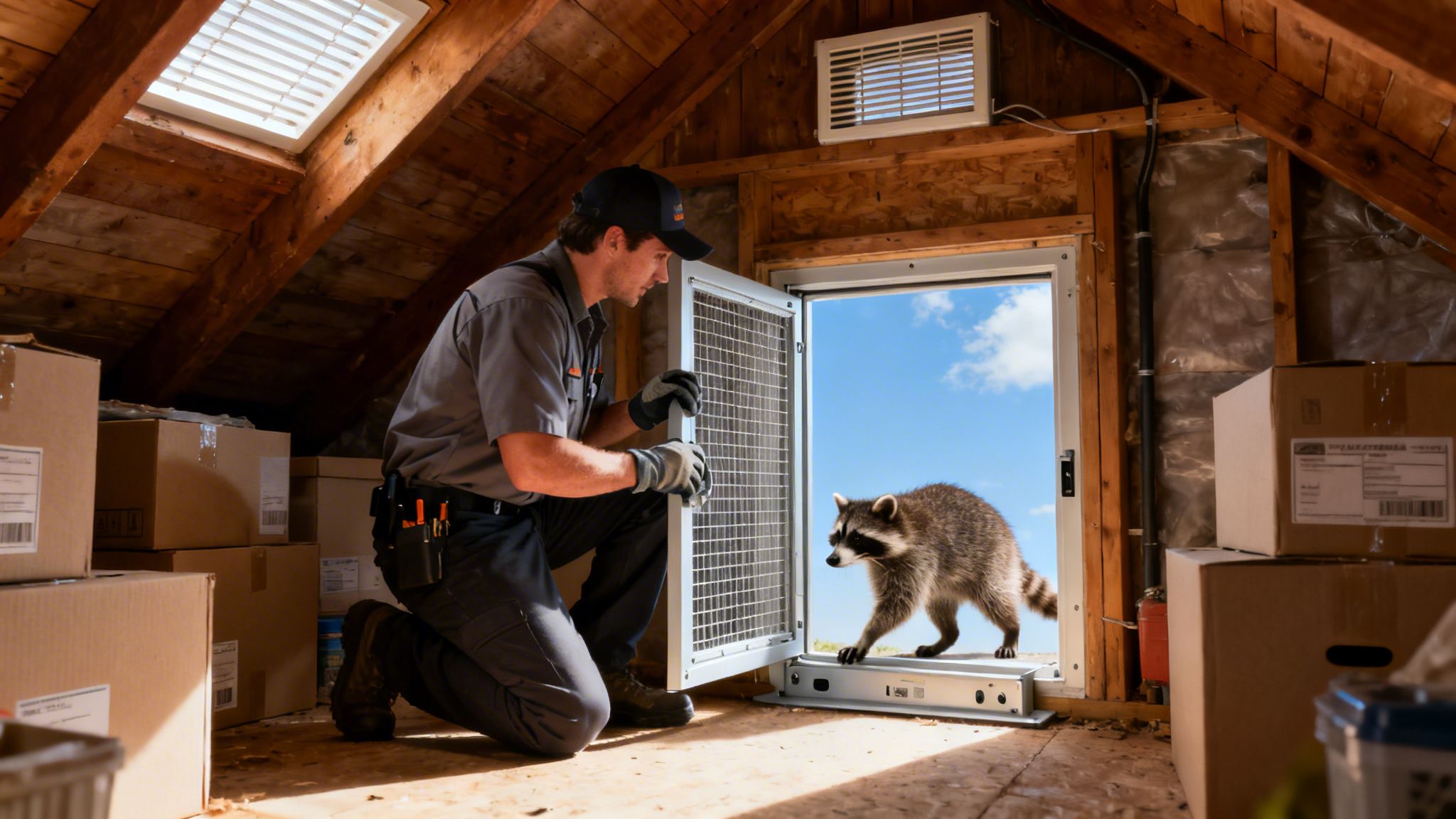
- Install One-Way Doors: This is the key tool. It lets animals walk out of your attic but blocks their return, solving the problem without any direct, stressful contact.
- Seal and Secure: After confirming the animals are gone, the crew returns to remove the door and permanently seal the hole with heavy-duty, chew-proof materials.
This is the standard of care you should insist on from any wildlife or rodent removal company, whether you're in Toronto or Milton. It keeps the animal family together and your home secure.
A Cautionary Tale from California
If you ever wonder why these species-specific methods are so critical, just look at what happens when the rules go wrong. A recent, glaring example comes from California.
The state passed the Poison-Free Wildlife Act of 2024, which severely limited the tools professionals could use for pest control. The result? An explosion in rodent populations. This government-made "rodent plague" showed the world what happens when proven, effective methods are banned without a viable alternative. This is exactly why experts in Canadian cities like Niagara Falls rely on integrated strategies—like one-way doors timed around an animal’s birthing season—to avoid accidentally making a problem much, much worse.
For homeowners in Ontario, the lesson is clear: trust certified professionals who understand the local laws and are committed to humane, lasting solutions. You can find out more about what to look for in a qualified expert by exploring our comprehensive guide on professional wildlife removal.
What Really Happens When You Call an Animal Removal Pro?
So, you've decided to call in the pros. Smart move. But what actually happens when that pest control truck pulls up to your house? It’s a lot more involved than just setting a trap and hoping for the best.
A true professional doesn't offer a quick fix; they deliver a permanent solution. They have a methodical process that gets the animals out, keeps them out, and cleans up the mess they left behind. Understanding these steps will help you see exactly what you’re paying for and why it's worth it.
Four Stages of Professional Attic Animal Removal
The entire process, from the first visit to the final handshake, typically follows four distinct stages. Each one is crucial for making sure your attic becomes—and stays—animal-free. Here’s a breakdown of what you can expect.
| Stage | Technician's Actions | Homeowner's Role | Typical Timeline |
|---|---|---|---|
| 1. The Inspection | Conducts a top-to-bottom assessment of the attic and exterior to identify the animal, find all entry points, and evaluate damage. | Provide access to the attic and property. Share any details you have about the animal activity (noises, sightings). | 30-90 minutes |
| 2. Humane Removal | Installs a one-way door over the main entry point, allowing animals to leave but not re-enter. Monitors for activity. | Avoid the area near the one-way door. Listen for any changes in attic noise (or lack thereof). | 3-10 days, depending on the species and weather |
| 3. Exclusion & Sealing | Removes the one-way door once the attic is clear. Permanently seals all entry points and reinforces other weak spots with chew-proof materials. | Review the completed work with the technician and ask questions about the materials used. | 1-4 hours |
| 4. Cleanup & Decontamination | Safely removes contaminated materials like droppings, nests, and ruined insulation. Deodorizes and sanitizes the area. | Stay clear of the work area due to potential biohazards. Approve the final state of the attic. | 2 hours to a full day, depending on the severity |
This structured approach is what separates a legitimate wildlife control company from a simple handyman service. It's designed to solve the problem for good.
Stage 1: The Inspection
The first thing a technician will do is play detective. This isn't just a quick peek into your attic with a flashlight; it's a full-blown investigation to understand exactly what’s going on.
They’re on the hunt for clues: the type of animal, the main entry point they're using, and—just as importantly—any other weak spots that could become a future problem. A pro working in, say, Milton might find the squirrel getting in through a chewed-up roof vent, but they'll also spot a loose soffit on the other side of the house that’s just begging for the next critter to move in. They’ll also assess the damage, from chewed electrical wires and trampled insulation to the biohazards left behind.
Stage 2: Humane Removal
Once they’ve mapped out the situation, the eviction process begins. In Ontario, any reputable pest control company will use humane methods that follow provincial wildlife laws. The go-to tool for this is almost always the one-way door.
Think of it as a bouncer for your attic. This device is fitted directly over the animal's main entrance. It’s ingeniously designed to let them push their way out to find food and water, but it slams the door shut when they try to get back in.
What about babies? This is where a one-way door is so effective. A mother raccoon or squirrel won't abandon her young. The door gives her the time she needs to exit and move her kits or pups, one by one, to a backup den she already has nearby. It’s a low-stress method that keeps the family together and prevents the heartbreaking scenario of babies being orphaned and left to die in your attic.
The best professional pest control services are built around this ethical approach.

As this infographic shows, a truly professional job must be lawful, humane, and safe—for you, your property, and the animals themselves.
Stage 3: Strategic Exclusion
After a few days, the technician will confirm your unwanted tenants have moved out for good. Now comes the most critical step for a long-term solution: exclusion. They’ll remove the one-way door and permanently seal that primary entry point with something tough, like heavy-gauge steel mesh that raccoons can't just tear away.
But they won’t stop there. A thorough pro will also "animal-proof" all the other vulnerable spots they found during the inspection. This might mean:
- Screening every roof and gable vent.
- Securing a brand-new chimney cap.
- Reinforcing any weak fascia boards or soffits.
This is the work that prevents you from having to make the same phone call next year when another animal discovers your home's weak points.
Stage 4: Cleanup and Decontamination
The animals are gone, and the house is sealed. The final step is to deal with the hazardous mess they left behind. Animal waste isn't just dirty; it can be dangerous. Raccoon droppings can carry roundworm eggs, while bat guano can cultivate a fungus that causes serious respiratory illness in humans.
A professional crew arrives with the right personal protective equipment (PPE) and commercial-grade cleaning agents to do this safely. They'll remove soiled insulation, vacuum up droppings, and treat the area with enzymatic cleaners that break down odours and neutralize pathogens. For a massive infestation, like a commercial pest control job we handled in a Toronto warehouse, this can be a huge undertaking involving the removal and replacement of entire sections of insulation.
It’s not just about making things tidy; it’s about restoring your home to a safe, healthy space. If you're dealing with different kinds of intruders, like insects, you can check out our specialized services for things like bed bug removal to see how professionals tackle those unique challenges.
How Much Does Attic Animal Removal Cost in Ontario?
When you realize an animal has made itself at home in your attic, one of your first thoughts is probably, "What's this going to set me back?" Honestly, there’s no simple, one-size-fits-all answer for professional animal removal in Ontario. The final bill is tied directly to the specific situation unfolding over your head.
It’s a bit like taking your car to the mechanic. A simple oil change is one thing, but rebuilding the engine is a completely different story. In the same way, coaxing a single squirrel out of a wide-open attic is a world away from dealing with a whole raccoon family that’s been systematically tearing up insulation and creating a biohazard for weeks. The cost really just reflects the time, risk, and materials needed to get your home back to normal.
What Factors Influence the Price?
A handful of key variables will shape the final cost of the job. Any reputable pest control company should walk you through these factors transparently when they give you a quote, so you know exactly what you’re paying for. Never hesitate to ask for a clear breakdown.
The main cost drivers usually come down to four things:
- The Type of Animal: Getting rid of a few mice is typically less involved and therefore less costly than evicting a stubborn, powerful raccoon.
- The Size of the Infestation: A single, confused squirrel that wandered in is a pretty straightforward fix. A whole colony of bats or a mother raccoon with her kits demands a much more careful, multi-step strategy.
- Attic Accessibility: If your attic is low, cramped, or filled with clutter, it's tougher and more hazardous for a technician to work in. That difficulty is often reflected in the labour cost.
- The Extent of Damage: The bill will climb if the job also requires major repairs—things like replacing shredded insulation, fixing chewed wiring, or patching up the roof.
A Real-World Cost Example
Let's walk through a common scenario we see in suburbs across Ontario. Imagine a family in Milton starts hearing loud thumps and scratching sounds at night. They call in a pro, who finds a mother raccoon and her four kits have been living in the attic for at least a month.
The initial inspection alone might run between $100 and $250. This fee is often rolled into the total cost of the job if you decide to go ahead. In this case, the technician from a pest control Milton service finds the raccoons have torn a big hole in a roof soffit to get in, shredded heaps of insulation for nesting, and created a latrine area, which is a serious health hazard.
First, the removal itself—which involves installing a one-way door so the mother can move her kits out on her own—could be anywhere from $350 to $700. Once they're gone, the real work begins. The sealing and exclusion work to block the entry point and reinforce other vulnerable spots might cost another $300 to $600. And finally, the cleanup. Safely removing all the contaminated insulation and sanitizing the space could add $500 to $1,500+ to the final invoice.
As you can see, what started as just a "noise in the attic" quickly turned into a major project easily costing over a thousand dollars. This is exactly why it pays to act fast. The longer an animal is left undisturbed, the more damage it causes and the more expensive the fix becomes. For a broader look at pricing, our guide on how much pest control costs offers some great additional context.
Whether you're in a bustling city like Toronto or a quieter spot like Niagara Falls, the fundamentals of pricing are the same. The only way to know for sure what you'll pay is to have a professional inspect the property in person. That's why our platform is so helpful—it connects you directly with vetted local experts who can give you detailed, no-obligation quotes for everything from rodent removal to complex wildlife-proofing, ensuring you get a fair price for a complete, lasting solution.
How to Prevent Future Animal Invasions in Your Attic
Getting the animals out of your attic is a huge relief, but the job isn't over yet. The real work begins now: making sure they can't get back in. Honestly, prevention is the single most effective (and cheapest) wildlife strategy you can have.
Think about it—sealing a hole is a lot less expensive and stressful than dealing with another round of removal, clean-up, and repairs. The aim is to turn your home from an easy target into a fortress that the next curious raccoon or squirrel won't even bother with.
Your Attic Pest-Proofing Checklist
Getting ahead of the problem by securing your home’s exterior is the only way to get lasting peace of mind. I remember a client in Aurora who had squirrels return like clockwork every year. After we connected them with a local pest control Aurora service for the removal, they implemented a full exclusion plan, meticulously sealing every weak spot along the roofline. They haven't had a problem in years.
Here’s a practical checklist you can use to do the same for your home:
- Secure All Vents: Cover every roof, gable, and soffit vent with heavy-gauge galvanized steel mesh. This stuff is tough enough to stop even the most determined raccoons from chewing or tearing their way through.
- Install a Chimney Cap: An open chimney is basically a welcome sign for raccoons, birds, and squirrels. A professionally installed chimney cap is an absolute must-have.
- Repair Roof and Soffit Damage: Regularly check for and fix any loose soffits, damaged fascia boards, or warped shingles. Animals are experts at exploiting even the smallest gaps.
- Trim Overhanging Branches: Cut back any tree limbs that get within 10 feet of your roof. Animals use these as a personal bridge to get onto your house.
Professional Exclusion and Repair Services
While some of these tasks might seem like a good weekend DIY project, getting professional help often makes more sense, especially when you're working at heights or dealing with tricky roof angles. The good news is that most pest control experts are also skilled in this kind of exclusion work.
Prevention is the final, and most critical, phase of a successful wildlife management plan. It transforms a one-time removal into a permanent solution, ensuring you don't have to search for "animal removal from attic near me" ever again.
These companies don’t just offer rodent removal; they offer a complete pest control solution. Once the animals are evicted, their technicians can immediately get to work sealing entry points and reinforcing weak spots with durable, pro-grade materials. This all-in-one approach gets the job done right the first time.
This strategy is part of a bigger concept called Integrated Pest Management. If you want to dig a bit deeper, you can learn more about what is Integrated Pest Management in our detailed guide. Whether you're in Toronto or Niagara Falls, investing in prevention is the smartest move you can make to protect your home for good.
Frequently Asked Questions About Attic Animal Removal
When you discover an unwanted guest in your attic, your mind probably starts racing with questions. Let's tackle some of the most common concerns we hear from homeowners, so you can figure out your next steps.
How Urgently Do I Need to Act?
Immediately. An animal in the attic is a ticking clock, not a "wait and see" situation. Every single day they’re up there, the damage gets worse. We're talking about chewed electrical wires (a serious fire hazard), shredded insulation that sends your heating bills soaring, and a growing mess of hazardous droppings and urine.
To put it in perspective, a single raccoon can tear up a huge section of your attic in just one week. Acting fast, whether you're in Toronto or Milton, can be the difference between a simple removal and a repair bill that runs into thousands of dollars.
What if There Are Baby Animals in My Attic?
This is incredibly common, especially during the spring when raccoons and squirrels are nesting. Whatever you do, never try to remove the babies yourself. You’ll almost certainly separate them from their mother, which is not only cruel but also creates a much bigger problem. The mother may become aggressive trying to get back in, and any young left behind will eventually die, causing a truly awful odour and biohazard situation.
A professional pest control expert knows exactly how to handle this. They’ll typically install a special one-way door that lets the mother move her kits or pups to a backup den she already has waiting. It’s the safest, most effective, and most humane way to solve the problem for good.
Are the Removal Methods Safe for My Family and Pets?
Absolutely. Any reputable pest control company in Ontario puts safety first. They steer clear of dangerous poisons or traps that could harm your pets or other non-target animals.
The gold standard for humane removal involves using physical barriers and exclusion tools, like one-way doors. These are designed specifically to get the target animal out without leaving any harmful chemicals or poisons in or around your home. Always ask your rodent removal provider in places like Aurora or Niagara Falls to walk you through their methods.
Who Is Responsible for Animal Removal If I Am Renting?
In almost every rental situation in Ontario, the responsibility falls on the landlord. They are legally required to provide a safe, habitable home, and that includes dealing with pests and wildlife.
Your first step should be to notify your landlord in writing the moment you suspect there’s an issue. If they don’t take action in a reasonable amount of time, you can contact the Landlord and Tenant Board for advice on what to do next.
When you have a wildlife emergency, you need professional help you can trust—and you need it now. ServiceQuotes.ca is designed for exactly this moment. Just fill out one simple form, and you'll get up to three free quotes from vetted, local experts in everything from humane wildlife control to commercial pest control. Get your free quotes from local pros now.