
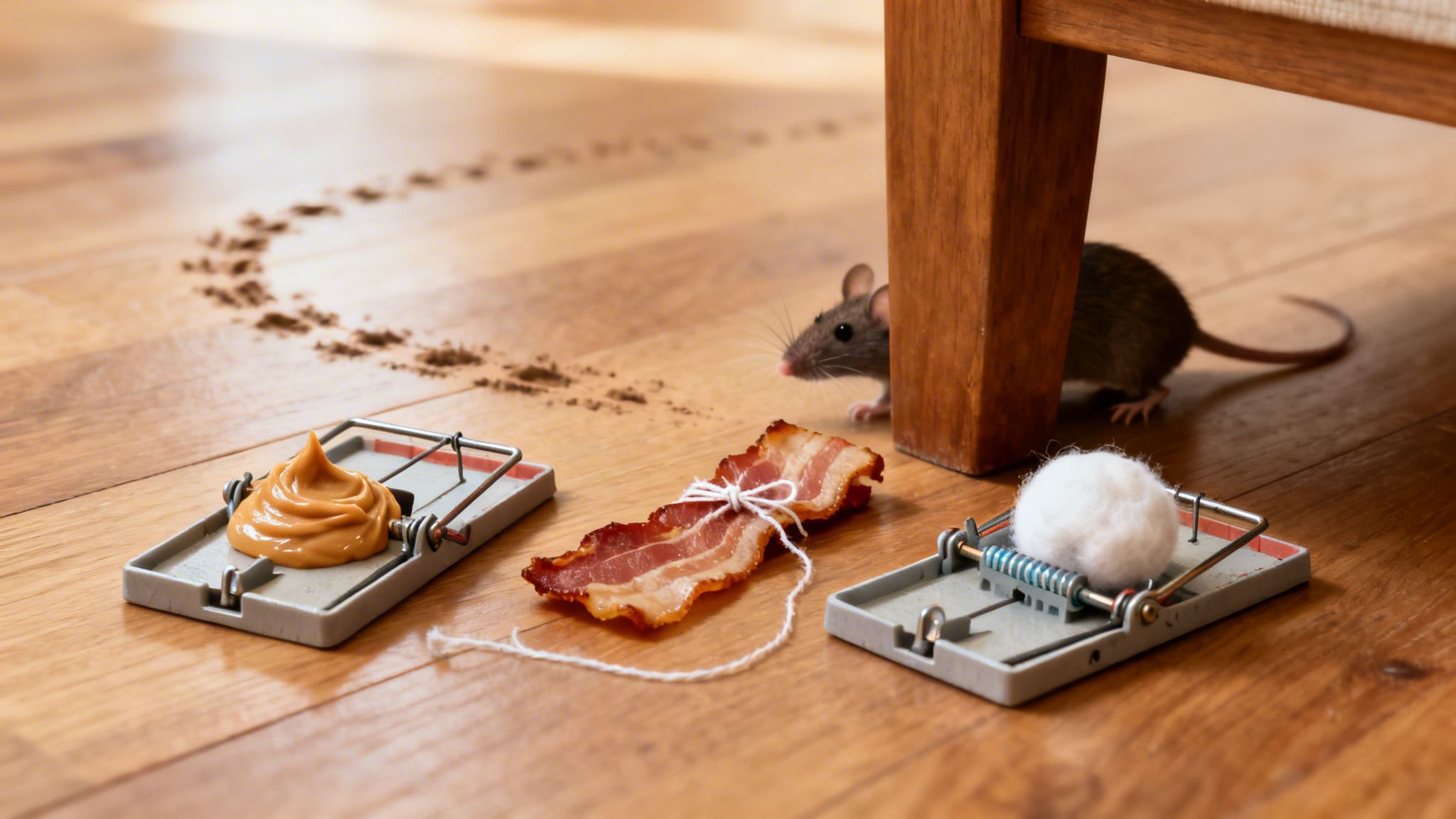

If you've ever set a mouse trap only to find it empty and the bait gone the next morning, you know the frustration. The secret to success often has nothing to do with the trap itself, but everything to do with what you put on it.
So, what’s the best bait for mouse traps? Forget the cartoon image of a wedge of cheese. In my experience, mice are far more tempted by foods that are high in protein, fat, and sugar. Think peanut butter, hazelnut spread, or even a small piece of bacon. These foods have a strong, enticing aroma that mice simply can't resist, and that scent is what will draw them to the trap.
Choosing the right bait can completely change your trapping game. However, if you're dealing with a persistent problem, especially in a dense urban area like Toronto, a professional approach to rodent removal might be necessary to solve the issue for good.
The 5 Best Baits for Your Mouse Traps
Before you set your next trap, take a moment to think like a mouse. They're guided by an incredible sense of smell and are always on the lookout for a high-calorie meal. This is precisely why a sticky, fragrant bait works so much better than a dry, crumbly piece of cheese. A simple switch in what you're using can be the difference between a persistent mouse problem and a quiet, pest-free home.
Here's a quick look at some of the most effective baits I've used over the years.
Top 5 Baits for Mouse Traps Rated
This table gives a quick comparison of the most effective and commonly recommended baits for mouse traps, helping you make an informed choice instantly.
| Bait Type | Effectiveness Rating (1-5) | Pros | Cons |
|---|---|---|---|
| Peanut Butter | 5 | Strong scent, sticky, inexpensive, and readily available. | Can be messy; some mice might lick it off without triggering the trap if not applied correctly. |
| Chocolate/Hazelnut Spread | 5 | Highly attractive due to sugar and fat; strong aroma. | Similar to peanut butter, it can be licked off if not secured properly. |
| Bacon Bits/Grease | 4 | Powerful, meaty scent is a huge draw for mice. | Can go rancid; might attract other unwanted pests like ants. |
| Soft Cheese | 3 | Better than hard cheese; scents from brie or cream cheese are more appealing. | Dries out quickly and loses its scent; less effective than sweeter options. |
| Nesting Materials | 3 | Cotton balls, yarn, or twine can attract mice looking to build a nest. | Not a food source, so it may be less of a draw if mice are hungry. Best in colder months. |
Ultimately, peanut butter and chocolate spreads consistently rank as top performers because their sticky consistency forces the mouse to work at the bait, increasing the odds of triggering the trap.

Why Your Bait Choice Is So Important
A perfectly placed trap is useless if the bait isn't tempting enough to draw a mouse in. I’ve seen it countless times—a homeowner in a place like Aurora, Ontario, will struggle for weeks with traps that get ignored, all because they’re using a stale cracker. Meanwhile, a professional pest control service will solve the issue in a day with strategic baiting and placement.
This isn't just a coincidence. Well-baited traps are proven to be incredibly reliable. One study, for example, found that snap traps caught mice in 31 instances, while rodenticide was consumed 78 times without a confirmed kill. These trapping efficacy findings highlight just how effective a physical trap can be when paired with a lure the mice actually want.
The best bait doesn't just attract a mouse—it makes them interact with the trap long enough for it to work. That’s why sticky, fragrant foods are so effective. The mouse has to tug and pull to get the reward, which dramatically increases the chance of a successful capture.
While smart baiting is a fantastic starting point, a relentless infestation can be a sign of a much bigger issue. If you're in a dense area like Toronto and you're catching mice regularly but they just keep coming, you're likely dealing with an established colony that DIY methods won't solve.
In these cases, you need to find and seal their entry points. A professional can conduct a thorough inspection to find nests and access points you might have missed, providing a lasting solution for your rodent removal needs.
The Best Homemade Baits for Canadian Homes
You don’t need to rush out and buy expensive commercial baits to get rid of mice. In my experience, the most effective lures are probably already sitting in your kitchen pantry. Forget the old cartoon cliché of cheese—what you’re really looking for are foods packed with calories and strong smells that can cut through the air and grab a mouse’s attention.
Mice have an incredible sense of smell and are always on the hunt for high-energy food to power their fast metabolisms. Tapping into this instinct is the key to making your traps work.
High-Protein and Fatty Baits
Nothing gets a mouse’s attention quite like the smell of fat and protein. These are high-value food sources that promise a major energy boost, making them practically irresistible.
- Peanut Butter: This is the undisputed champion of mouse baits for a good reason. The rich, nutty odour travels surprisingly far, and its sticky nature is a huge advantage. A mouse can't just grab it and run; they have to stop and work at it, which gives the trap plenty of time to spring. Just a pea-sized dab is all it takes.
- Bacon Bits: The smoky, greasy aroma of bacon is a powerful attractant. You can use a tiny piece of cooked bacon, but even a smear of bacon grease is often enough. It’s especially useful in places with competing food smells, like a kitchen or pantry.
A pest control technician in Milton, Ontario, once shared a story about a small cafe struggling with mice in their storeroom. They'd tried every bait. The technician suggested they switch to a tiny bit of bacon grease. The very next morning, all the traps had done their job. Sometimes, a high-value bait is all it takes to overcome a mouse’s natural caution.
Irresistible Sweets and Spreads
Beyond fatty foods, mice also have a real sweet tooth. Sugary items signal a quick hit of energy, which can be just as tempting as protein.
Chocolate or hazelnut spreads are fantastic options here. Similar to peanut butter, they combine a sweet scent with a sticky texture. In fact, a dab of a spread like Nutella can sometimes outperform peanut butter, especially if the local mouse population has learned to be wary of the more common bait.
Pro Tip: Try melting a small piece of chocolate directly onto the trap’s trigger. Once it hardens, the mouse has to chew or tug on it to get a taste. This almost guarantees they'll set off the mechanism.
Nesting Materials in Colder Seasons
When the temperature drops across Ontario, a mouse's priorities change. Food is still crucial, but finding a warm, insulated place to nest becomes a primary driver. During the autumn and winter, you can use this instinct to your advantage by baiting traps with nesting materials.
- Cotton Balls: A tuft of cotton is a prime find for a mouse. To make it even more enticing, add a single drop of vanilla extract for a sweet, inviting scent.
- Dental Floss or String: A small piece of unscented dental floss or a bit of yarn can also work wonders. For a killer combination, try rubbing a tiny amount of peanut butter into the fibres.
The mouse will see these items not as food, but as building supplies for their home. They'll try to pull the material loose to drag it away, triggering the trap as they tug.
If you’re dealing with a bigger problem that seems to be spreading, these baiting tips are a great start, but they might not be the whole solution. For a serious infestation, especially in a larger building, you often need a professional to find where the mice are coming from. The experts we work with for pest control in Mississauga are skilled at finding the hidden entry points and nests that even the most determined DIYer might overlook.
How to Bait and Set Your Traps Like a Pro

You’ve picked out the perfect bait for mouse traps, and that’s a great start. But here’s something I’ve seen countless times: even the most irresistible bait won’t work if the trap is baited or placed incorrectly. The number one mistake people make is globbing on way too much bait. A huge dollop of peanut butter lets a mouse just lick around the edges, get a free meal, and walk away without ever setting off the trigger.
Your goal is to make them commit. All you need is a pea-sized amount of any sticky bait. A smaller target forces the mouse to investigate more thoroughly and apply direct pressure, which is exactly what you need to spring the trap.
Of course, some mice are just incredibly skilled thieves. To outsmart them, especially with solid baits like chocolate or bacon, try this trick: use a small piece of dental floss to tie the food securely to the trigger mechanism. This makes it impossible for them to just grab and go. They’ll have to pull and wrestle with it, virtually guaranteeing the trap goes off.
Finding the "Mouse Highway" for Perfect Placement
Mice are cautious and predictable. They don't run across open spaces. Instead, they stick to the edges, using walls and furniture as cover to create invisible "runways" through your home. Placing your traps right in their path is the key to catching them quickly.
To get results, you have to think like a mouse. Look for their likely travel routes. The most effective spots are nearly always:
- Along walls and baseboards. Mice feel secure with a solid surface next to them. Place your trap perpendicular to the wall, with the baited end facing it.
- Behind large appliances. The dark, warm, and hidden spaces behind a fridge, oven, or washing machine are prime real estate for rodents.
- In quiet corners. Think inside kitchen cupboards, under the sink, and in the forgotten corners of your pantry or closets.
- Near suspected entry points. If you've spotted a tiny crack or hole where you think they're getting in, a trap right next to it is a smart move.
For example, a commercial property manager in Niagara Falls was at his wit's end with a persistent mouse issue in his hotel. He'd tried every bait imaginable. A pest control team came in, and the problem wasn't the bait at all—it was the placement. They spent an hour identifying the rodent runways and setting traps accordingly. The problem was completely resolved in less than 48 hours.
This goes to show that where you put the trap often matters more than what you put on it. Professional technique makes a huge difference. In fact, some live-trapping studies have shown DIY success rates as low as 2.7% over almost 1,100 trap nights. In contrast, another study that prioritized strategic placement achieved a 20% success rate, proving how critical expert knowledge is. You can read more about these urban rodent trapping findings for yourself.
If you’re in a dense area like Toronto or dealing with more than just one or two mice, a few traps might not cut it. For a more serious infestation, you need a full-blown strategy. Our network includes professionals who deliver commercial pest control and can tackle large-scale rodent problems far more effectively than DIY methods ever could.
Troubleshooting Your Common Trapping Failures

It’s a frustrating feeling, isn't it? You check your traps in the morning only to find the bait licked clean or the trap completely ignored. If your DIY pest control efforts aren't paying off, don't worry—it’s a common issue, and usually, a few small adjustments are all it takes to turn things around.
Most of the time, when a trap fails, it comes down to one of a few classic mistakes. Let's walk through the most common problems and figure out how to outsmart these unwelcome little guests.
The Bait Is Gone But the Trap Is Still Set
This is the calling card of a tiny, clever thief. When the bait for mouse traps vanishes but the trap hasn’t sprung, it’s a clear sign that the mouse ate and ran without ever triggering the mechanism. This usually happens for two reasons: you’ve used too much bait, or the mouse is too light to set it off.
A big dollop of peanut butter lets a mouse nibble the edges without putting any pressure on the trigger. The fix is to use only a pea-sized amount and really work it into the trap’s bait pedal.
Pest control pros in Toronto often deal with this by tying a small bit of bacon to the trigger with dental floss. The mouse has to tug and pull at the bait, which gives the trap the force it needed to finally spring.
The Traps Are Completely Ignored
If mice are actively avoiding your traps, they might be what we call "trap-shy." Mice are naturally wary of new things in their environment, so a suddenly appearing trap can make them suspicious. The best way to handle this is a technique called pre-baiting.
Here's how it works:
- Place your traps in high-traffic mouse runways, but leave them unset.
- Add a small amount of bait and let the mice get comfortable taking it for a day or two.
- Once they see the traps as a safe and reliable food source, you can go ahead and set them.
This simple trick helps build a false sense of security and can make all the difference. It's also critical to remove any competing food sources. Keep your kitchen counters clean, store pantry items in airtight containers, and make sure your garbage is sealed. If an easier meal is available, a mouse will almost always take that over your bait.
If you find your traps are consistently being ignored or cleaned out, it could be a sign of a much larger, more established infestation. When you're up against a significant population, you're not just dealing with one or two mice—you're competing with dozens of them.
When DIY Isn't Enough for Ontario Homes
Have you tried different baits, secured them perfectly, and placed your traps in all the right spots, but still have nothing to show for it? At some point, it may be time to call in the professionals. This is especially true in denser communities like Aurora or Milton, where a rodent problem in one home can easily spread throughout the neighbourhood, making it nearly impossible to solve on your own.
A professional can accurately assess the full scope of the infestation, identify entry points you might have missed, and create a comprehensive plan. If you’re facing a stubborn rodent problem that just won’t quit, getting expert help is your best next step. You can find qualified local professionals through services that specialize in pest extermination to finally resolve the issue for good.
When to Call a Professional Rodent Control Expert

Using the right bait for mouse traps is a great first step, and it often works for a solo mouse that’s wandered inside. But sometimes, even the most perfectly baited traps just aren't enough. It's important to know when to wave the white flag and call in a professional, because a small mouse problem can escalate into a major infestation surprisingly fast.
One of the biggest red flags? Seeing a mouse out and about during the day. Mice are naturally nocturnal, so a daytime sighting usually means the nest is so overcrowded that younger or weaker mice are being forced to search for food at riskier times. That’s a big problem.
Signs Your Mouse Problem Is Out of Control
A few droppings under the kitchen sink can be dealt with, but finding them in multiple rooms—the pantry, the living room, the upstairs bedrooms—is a sure sign that the mice have made themselves at home everywhere. Add in constant scratching or scurrying sounds from inside your walls, and you can be certain you’re dealing with a well-established colony.
At this point, you're facing more than just a nuisance. You're facing serious risks:
- Property Damage: Mice are infamous for chewing through electrical wiring, which poses a very real fire hazard. They’ll also shred insulation for their nests and destroy drywall, furniture, and keepsakes.
- Health Hazards: Rodents can track bacteria and viruses all over your home, contaminating countertops and food. A large population dramatically increases the risk of disease transmission.
For many people, the breaking point comes when trapping feels like a never-ending chore. If you're catching mice every week but still seeing fresh droppings or hearing noises, you're probably just skimming the surface of a much larger population.
The Value of Professional Expertise
When you’re in over your head, a professional’s experience is worth every penny. Pest control experts know how to think like a rodent—they can find hidden entry points you’d never spot and assess the full scale of the infestation.
They also stay on top of changing regulations. For example, some regions are now banning certain types of rodenticides because of the harm they cause to owls, hawks, and other wildlife. This means effective trapping and exclusion work are more critical than ever, and that’s where a pro’s skill set really shines.
Once you’ve made the call to bring in help, knowing how to hire contractors properly will help you find a qualified and reputable company. For homeowners across Ontario, from Milton to Niagara Falls, the best path forward is to connect with a trusted local expert. We can put you in touch with vetted professionals who offer complete rodent removal services. They won’t just get rid of the mice; they’ll find out how they got in and seal up your home to make sure they don’t come back.
Frequently Asked Questions About Mouse Trap Bait
Even after you’ve picked the perfect bait and set your traps, some questions always seem to come up. Let's tackle a few of the most common ones I hear from people trying to get their mouse problem under control.
Can I Use Cheese as Bait for My Mouse Traps?
Honestly, the whole cheese thing is more of a cartoon myth than a practical reality. While a mouse might take the cheese if it's desperate, it's far from the best option. It tends to go stale and lose its scent pretty quickly, making it easy for mice to ignore.
You'll have much better luck with foods that are high in protein and sugar. A small smear of peanut butter, a dab of hazelnut spread, or even a bit of greasy bacon has a strong aroma that mice find almost impossible to resist.
How Long Should I Leave a Baited Trap in One Spot?
A good rule of thumb is to give a trap two or three days in one location. If you haven't caught anything by then, it’s time to move it.
Don't just assume the mice are gone. They're creatures of habit and can be wary of new things in their path. Try moving the trap to another spot where you've noticed activity, like behind the fridge or along a different wall with droppings. If you've tried several spots and baits with no success, especially in a high-activity area like Toronto or Milton, it could signal a larger issue that needs a professional eye.
A quick note on safety: Always place snap traps out of reach of children and pets. Good spots are behind heavy appliances, inside cabinets with safety locks, or within a tamper-resistant bait station. For homes with curious kids or pets, calling a pro is always the safest bet.
Are Mouse Traps Safe to Use with Pets or Children?
When you have a busy household, safety has to come first. While you can take precautions, the most reliable and stress-free approach is to work with a professional pest control service.
Experts in Ontario are trained to use methods that are not only effective but are specifically designed to be safe around your family and pets. For example, they can implement a strategy for bed bug removal or rodent control that minimizes risk. They can tackle the problem head-on without introducing new risks into your home, giving you complete peace of mind.
When your DIY efforts aren't enough and you need a permanent solution, ServiceQuotes.ca is here to connect you with the right people for the job. We help you find vetted, local pest control experts across Ontario for any issue, from a few rodents to a full commercial infestation. Get fast, free, no-obligation quotes and trust that your home is in professional hands. Find your local pro on our Pest Control page today.